

Web Design for Trucking Companies, Freight Brokers & Logistics Providers
VISIONEFX is a Hampton Roads web design agency — home region of the Port of Virginia — that has built websites for industrial and B2B service companies since 2000. We design trucking and logistics websites that do the two jobs this industry uniquely demands from one site: convince shippers and brokers you’re a legitimate, insured, verifiable carrier — and convince drivers you’re the company worth applying to. DOT/MC compliance displayed properly, carrier packets one click away, fleet pages that sell capacity, and recruitment lead flows built for a phone in a truck stop.
One Website, Two Audiences That Both Pay Your Bills
A trucking website is the rare site with two completely different conversions. Shippers and brokers land on it to vet you: authority, insurance, equipment, lanes, safety posture — they’ll cross-check your DOT number in FMCSA’s SAFER system before they ever call dispatch. Drivers land on it to size you up: equipment age, home time, pay structure, and whether applying takes two minutes or forty-five. Most trucking sites serve neither well. Ours are architected for both from the first wireframe — a freight side and a driving-careers side, each with its own conversion path, sharing one fast, credible brand.
DOT & MC Compliance, Front and Center
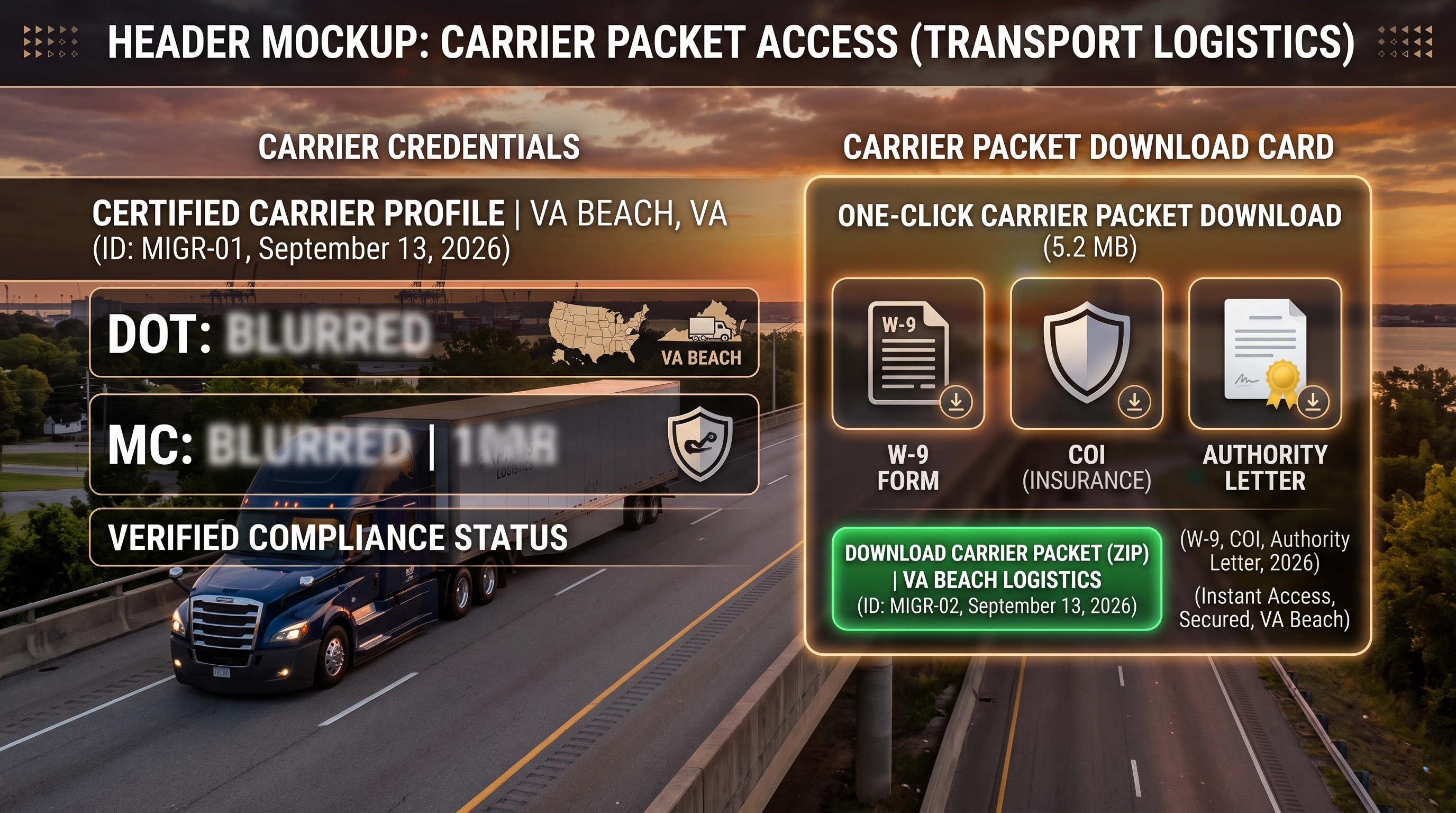
Legitimacy is the first thing freight decision-makers verify, so we build it into the frame: your DOT and MC numbers displayed in the header and footer, matching your FMCSA registration exactly, so the SAFER cross-check confirms rather than confuses. Then we remove onboarding friction with a carrier packet page: W-9, certificate of insurance request flow, operating authority letter, and setup documents downloadable in one place — because when a broker can complete carrier setup in minutes instead of a fax-and-email chase, you win loads that slower carriers lose. For freight brokers, the same page flips: your authority, surety bond, and carrier onboarding link (MyCarrierPackets/RMIS-style) presented for both sides of your marketplace.
Driver Recruitment Lead Flows Built for a Phone in a Truck Stop
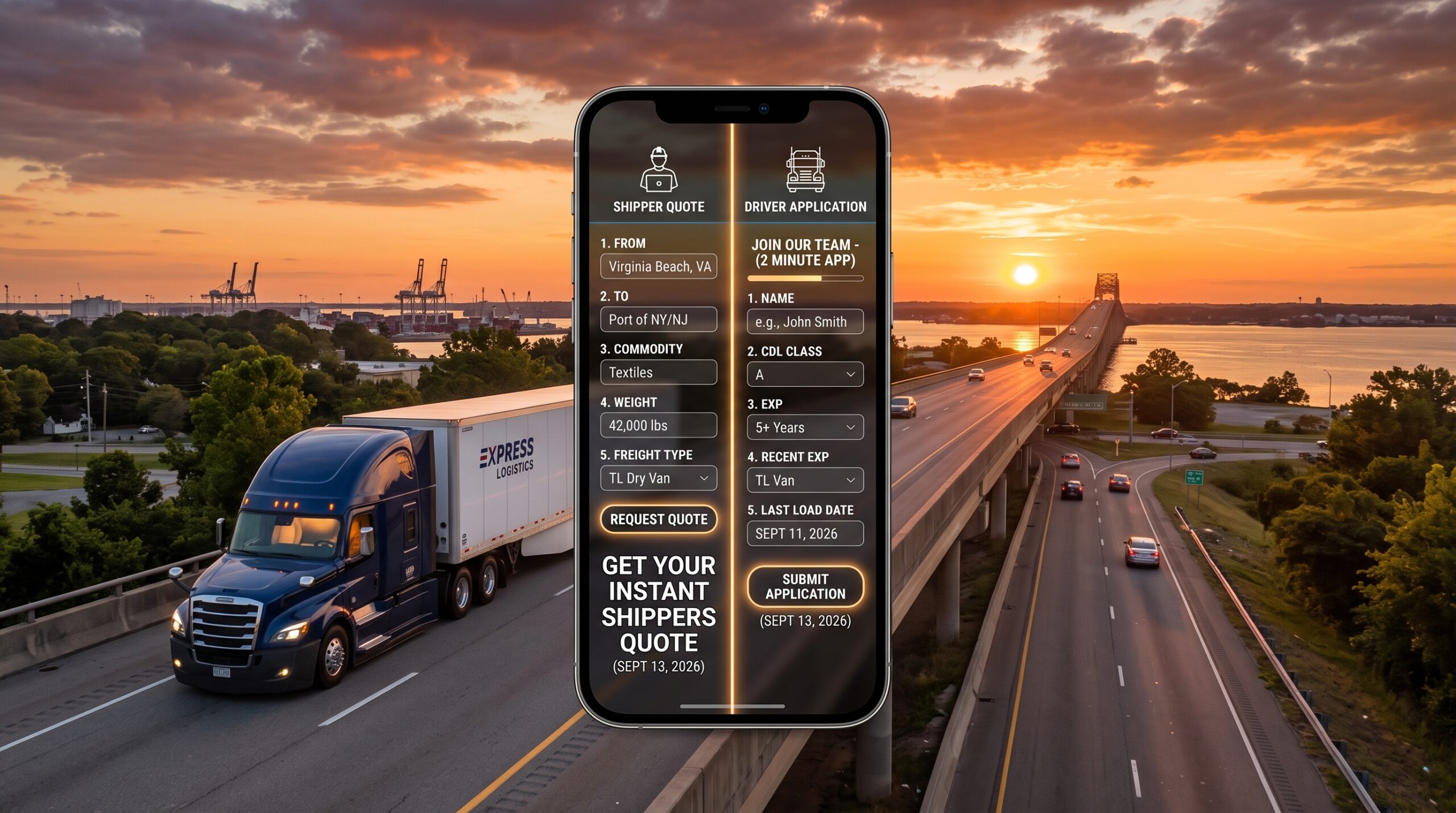
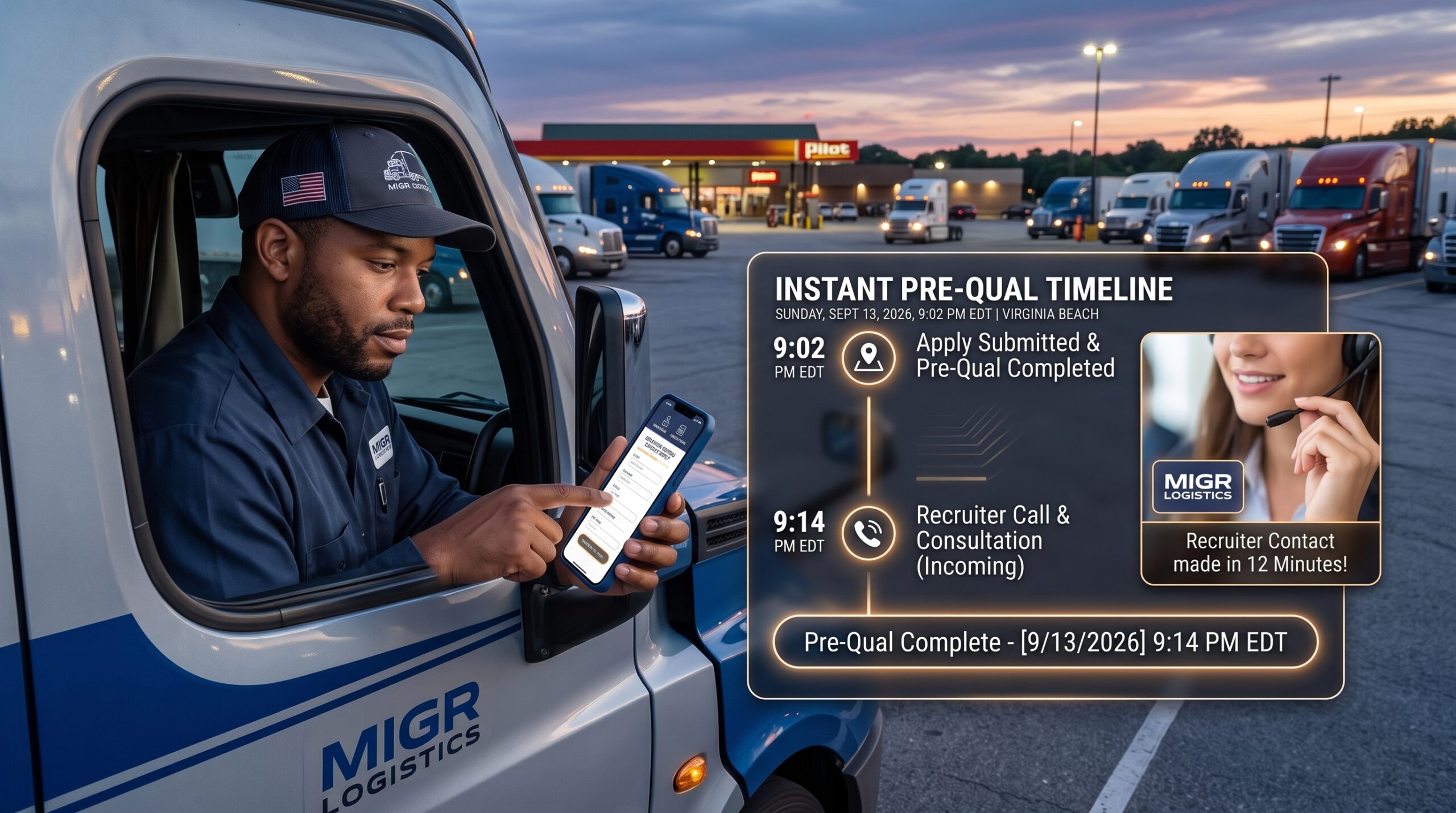
Recruiting is trucking’s most expensive marketing problem, and most carrier websites make it worse with a 45-minute application no one finishes on a phone. We build the flow the way drivers actually apply: a two-minute mobile pre-qualification form — CDL class, endorsements, experience, violations, home terminal preference — that captures the lead first, with the full DOT-compliant application following by link or through your recruiting platform. Forms route instantly to your recruiter via Tenstreet, DriverReach, or direct integration, with authenticated email delivery so applications never die in a spam folder. Speed-to-lead decides recruiting: the driver who taps your ad is applying to four other carriers tonight, and the first recruiter to call usually wins.
Equipment Showcase Pages That Sell Capacity — Twice
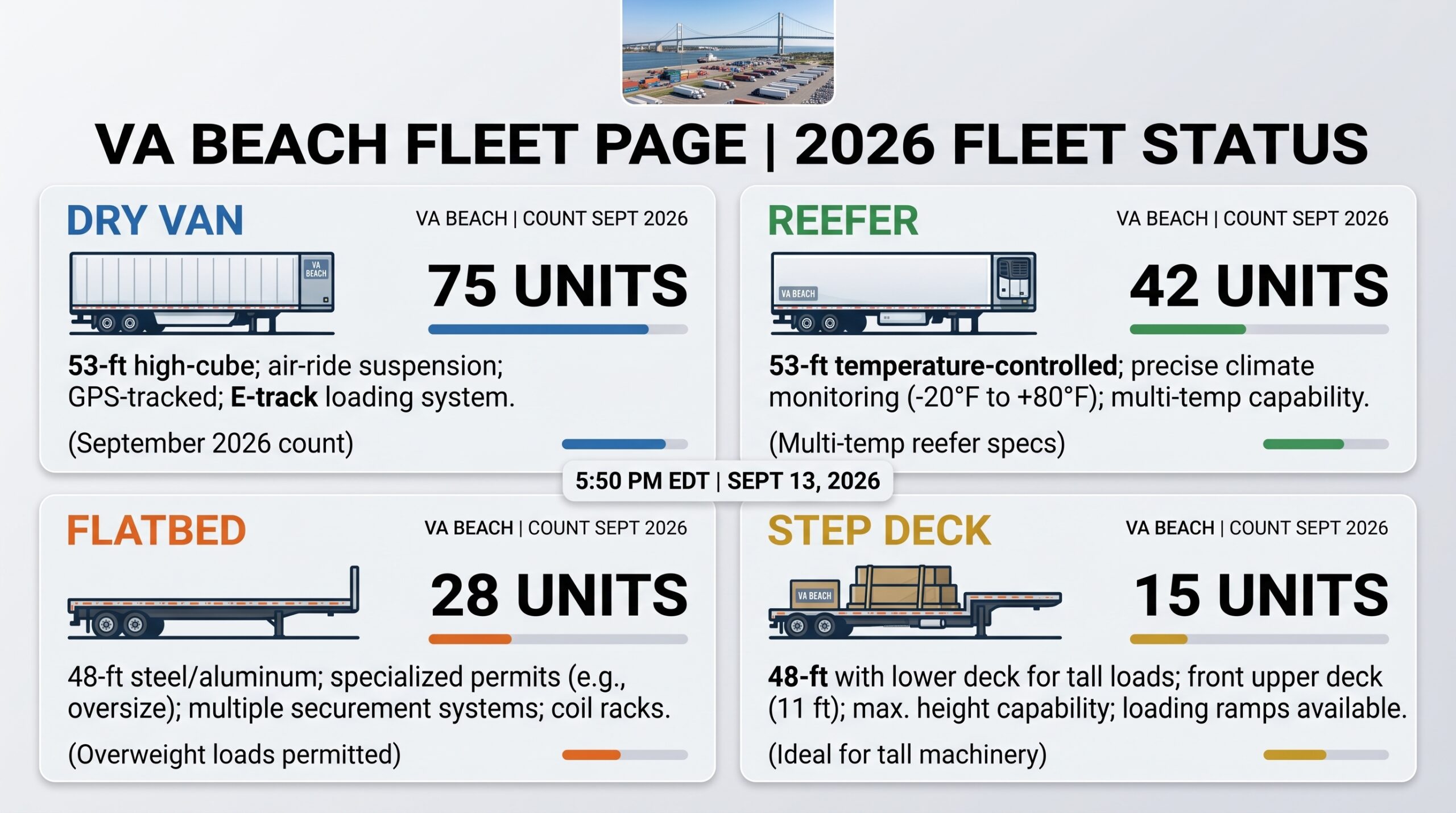
Fleet pages pull double duty. For shippers, they answer the capability question before it’s asked: tractors, dry vans, reefers, flatbeds, step decks — counts, specs, and real photos that prove you can cover the freight. For drivers, they answer a different question — what will I be driving? — and late-model, well-kept equipment photographed honestly is one of the strongest recruiting assets a carrier owns. We build equipment showcases as structured pages, not a forgotten photo gallery: each trailer type its own indexed page, tied to the lanes and freight types you actually run.
Built for How Freight Companies Operate
– Quote request forms that reach dispatch. Origin, destination, freight type, weight, timing — routed instantly to dispatch email or your TMS via API/webhook, with click-to-call for the freight that can’t wait.
– Lane and service-area pages. The regions, corridors, and freight types you run — structured for “flatbed carrier [region]” and “drayage Port of Virginia”-style searches shippers actually type.
– Recruiting and TMS integrations. Tenstreet and DriverReach on the driver side; API and webhook connections into transportation management and load systems on the freight side — leads land in the systems your team already lives in.
– Local SEO for terminals. Google Business Profiles per terminal, consistent NAP, and city pages — carriers are local businesses in every market they domicile trucks.
– AI search visibility (GEO). Structured data, llms.txt, and entity consistency so AI engines cite your company accurately when shippers ask for carriers — with AI mention tracking to prove it.
– Lightning-fast mobile builds. Core Web Vitals-tuned WordPress — because both of your audiences, dispatchers and drivers alike, are on phones.
Transportation & Industrial Track Record
VISIONEFX has spent 25+ years building for industrial and B2B service companies — equipment suppliers, technical services firms serving major diesel and heavy-equipment OEMs, flow-instrumentation manufacturers — the same buying culture trucking lives in: relationship-driven, credential-checked, and allergic to fluff. We’re headquartered in Hampton Roads, where the Port of Virginia makes freight a neighborhood industry. 150+ five-star Google reviews, and every build ships with measured mobile performance. [Feature 1–2 transportation/3PL portfolio items here — client, what was built, and the metrics: e.g., XX% increase in quote requests or driver applications over N months, mobile PageSpeed score before → after.]
[CLIENT NAME] — [Carrier / Broker / 3PL], [City, State]
The challenge: [e.g., no driver application flow; site failing on mobile; brokers couldn’t find insurance docs.]
What we built: [ … ]
The results:[Lead-generation metric] · [Mobile responsiveness metric: PageSpeed/CWV before → after] (pull from GA4, Tenstreet/ATS reports, and PageSpeed Insights.)
Frequently Asked Questions From Trucking & Logistics Companies
How much does a trucking company website cost?
A custom trucking company website costs $3,200 to $7,200 for most carriers and brokers in 2026, and $4,200 to $9,200 for larger sites with recruiting and TMS integrations, with prepaid care-plan tiers at $950, $1,700, and $3,000 for ongoing support. VISIONEFX — established 2000, 150+ five-star Google reviews — publishes its full pricing openly.
What should a trucking company website include?
A trucking website should include DOT and MC numbers displayed prominently, a carrier packet page with W-9 and insurance documents, equipment showcase pages by trailer type, lane and service-area pages, a freight quote form routed to dispatch, and a mobile driver application flow — plus the schema markup and fast mobile performance that get the company found and verified.
How do trucking websites recruit drivers?
Trucking websites recruit drivers with a short mobile pre-qualification form — CDL class, endorsements, experience — that captures the lead in about two minutes, followed by the full DOT application through a recruiting platform like Tenstreet or DriverReach. Instant routing to a recruiter matters most: drivers apply to several carriers at once, and the first company to respond usually wins the hire.
Should our DOT and MC numbers be on our website?
Yes. Shippers, brokers, and factoring companies verify carriers against FMCSA’s SAFER system before doing business, so displaying your DOT and MC numbers — matching your registration exactly — turns that check into a confirmation instead of a red flag. Pairing them with a downloadable carrier packet shortens broker onboarding from days to minutes.
Can our website connect to our TMS or recruiting software?
Yes. Driver application flows integrate with recruiting platforms like Tenstreet and DriverReach, and freight quote forms connect to transportation management and dispatch systems through APIs and webhooks, so every lead lands in the software your team already uses. Where a native integration doesn’t exist, structured email routing with authenticated delivery keeps the pipeline reliable.
Do freight brokers need a different website than carriers?
Yes — the trust problem inverts. A carrier site proves equipment, lanes, authority, and insurance to shippers while recruiting drivers. A broker site proves financial credibility to both sides: authority and surety bond displayed, shipper-facing service pages, and a carrier onboarding path with your setup packet — because a broker’s website has to convince carriers they’ll get paid and shippers they’ll get covered.
Why do trucking companies choose VISIONEFX for web design?
Trucking and logistics companies choose VISIONEFX for 25+ years of industrial B2B web design from Hampton Roads — home of the Port of Virginia — with the features freight actually needs built in: DOT/MC compliance display, carrier packet pages, driver recruitment flows with Tenstreet-class integrations, and AI search visibility. Established 2000, 150+ five-star Google reviews, published pricing, and direct access to the designer.
Get a Website That Books Freight and Seats Drivers
If shippers can’t verify you in one click — or drivers give up on your application before question ten — request a quote. We’ll review your site against the checklist above, from SAFER consistency to speed-to-lead, and show you exactly what a rebuild changes.